
SVT (Supraventricular Tachycardia)
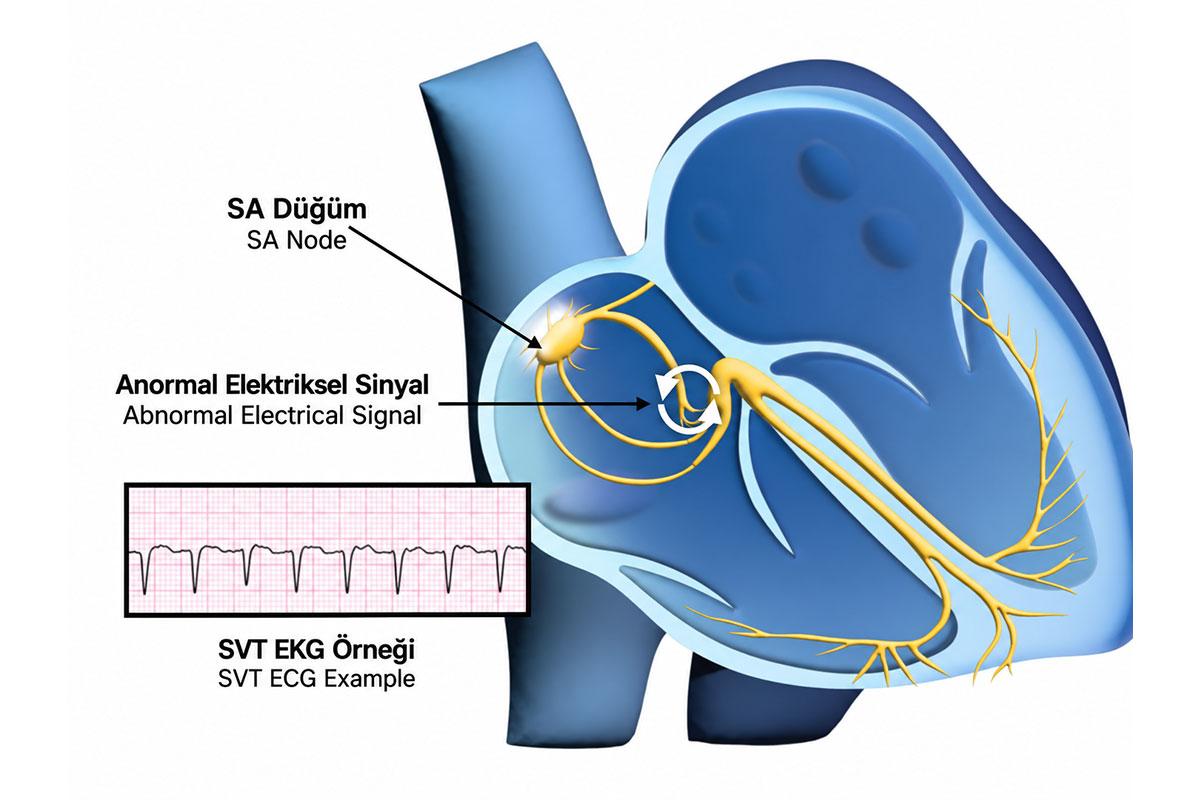
SVT (Supraventricular Tachycardia) is an arrhythmia originating from the upper chambers of the heart or the area around the atrioventricular node, typically causing fast, regular heartbeats that start and stop suddenly. It can present with palpitations, dizziness, and sometimes chest discomfort. In most cases it is not accompanied by structural heart disease, and diagnosis relies on ECG and Holter recordings.
SVT episodes usually start suddenly, can last anywhere from minutes to hours, and most often end on their own or with vagal maneuvers. The severity of symptoms varies from person to person; some patients experience only mild palpitations, while others may also have dizziness or reduced exercise capacity.
- Sudden-Onset, Regular Palpitations — A sensation of the heart suddenly speeding up and then just as suddenly returning to normal, with a generally regular rhythm, is the most typical symptom of SVT.
- Dizziness and Weakness — During a fast heartbeat, dizziness, weakness, or shortness of breath may occur; rarely, a brief loss of consciousness (syncope) may accompany it.
- Common in Young and Middle-Aged Individuals — SVT can also occur in young and middle-aged individuals without structural heart disease; congenital extra electrical pathways are an important risk factor.
- Triggering Factors — Caffeine, alcohol, intense stress, sleep deprivation, and strenuous physical exertion can trigger episodes in some patients.
The diagnosis of SVT is based on evaluating rhythm recordings obtained during or after an episode. Different diagnostic tools may be used together to rule out structural heart disease and determine the mechanism of the tachycardia.
- 12-Lead Surface ECG
- Rhythm Holter (24-48 hour or long-term event recorder)
- Echocardiography (to rule out structural heart disease)
- Exercise Stress Test (to assess triggering factors in some cases)
- Electrophysiology Study (EPS) — to determine the source and mechanism of the tachycardia
Most cases of SVT can be controlled with medication or simple measures. However, in certain clinical presentations, electrophysiological evaluation may be considered in more detail.
- Frequently Recurring Episodes Affecting Quality of Life — Further evaluation may be considered if palpitation episodes recur frequently and noticeably affect daily life.
- Insufficient Response to Medication — If episodes continue despite antiarrhythmic drug therapy, or if the medications cannot be continued due to side effects, electrophysiological evaluation may be considered.
- SVT Diagnosis Confirmed by ECG/Holter — In patients whose SVT diagnosis has been confirmed by rhythm recordings, an Electrophysiology Study may be planned to determine the mechanism.
- Episodes Accompanied by Syncope (Fainting) — If palpitations are accompanied by fainting or a feeling of impending fainting, a detailed investigation of the underlying mechanism may be recommended.
The approach to SVT treatment is determined step by step based on the frequency and severity of episodes and the patient's general condition. Treatment may range from simple measures to interventional methods.
- Step 1 — Vagal Maneuvers and Avoiding Triggers — Simple methods such as the Valsalva maneuver or washing the face with cold water can help stop an episode; avoiding caffeine, alcohol, and excessive stress can reduce how often episodes occur.
- Step 2 — Medication — Antiarrhythmic drugs and beta-blockers can be used both to stop an acute episode and to reduce recurrences.
- Step 3 — Electrophysiology Study (EPS) — The diagnosis is confirmed and the electrical source and mechanism of the tachycardia are identified, laying the groundwork for treatment in the same procedure if needed.
- Step 4 — Catheter Ablation — This interventional method, in which the abnormal electrical pathway is targeted with radiofrequency or cryoenergy, can provide a long-term reduction in episodes in selected patients.
The process and follow-up plan after treatment may vary depending on the treatment method used (medication or Catheter Ablation). The headings below provide a general framework.
- Immediate Post-Procedure Period — After Catheter Ablation, a brief observation and rest period is recommended, along with care of the access site.
- Reassessment of Medication — After ablation, the dose or duration of existing medication may be readjusted under physician supervision in some patients.
- Rhythm Monitoring — Monitoring for recurrence of symptoms such as palpitations or dizziness is recommended, with repeat Holter recording if needed.
- Regular Cardiology Check-ups — Periodic outpatient check-ups and ECG evaluation are part of long-term follow-up.
The information here is for general informational purposes; the diagnosis and treatment plan are determined based on an individual evaluation.