
WHAT IS PERIPHERAL ANGIOGRAPHY?
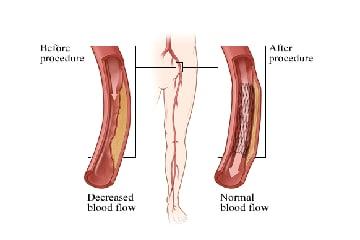
Peripheral artery disease is a reduction in blood flow caused by narrowing or blockage of the arteries that supply the arms or legs.
Narrowing or blockage in the leg arteries can cause pain and weakness in the legs while walking, pain at rest, coldness in the feet or non-healing wounds. When the arteries of the arms are affected, an absent pulse, a blood pressure difference between the two arms, coldness, pain or weakness may be seen.
The arteries are usually first evaluated with Doppler ultrasonography (USG). If a significant problem in blood flow or a narrowing/blockage is detected or suspected, peripheral angiography may be performed for diagnosis and, when necessary, treatment.
Depending on the affected vessel region, the procedure is usually performed by entering through the wrist or groin artery with a thin catheter. The vessels are visualized by injecting contrast dye. When necessary, balloon angioplasty, drug-coated balloon and/or stent can be applied in the same session to open narrowed or blocked vessels and improve blood flow.
After the procedure, patients are usually observed in the hospital for the same day or one night before being discharged.