
Ventricular Arrhythmias
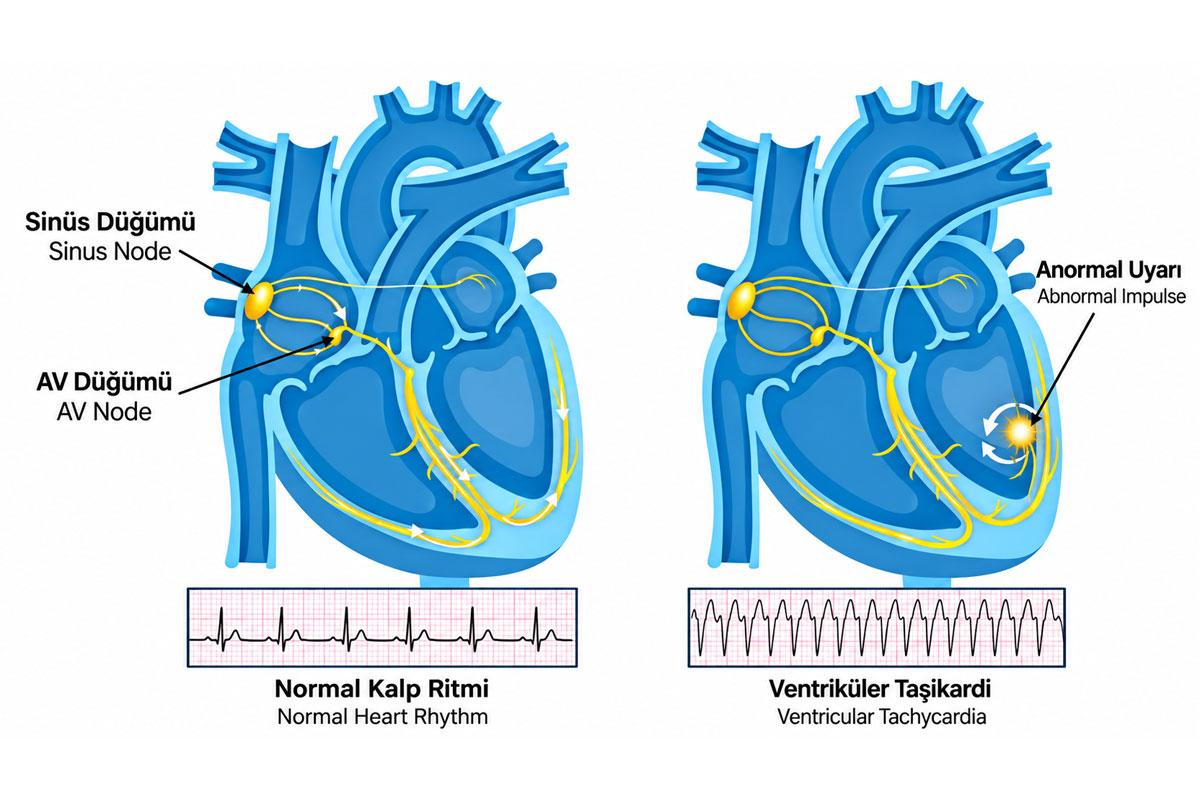
Ventricular arrhythmias are rhythm disorders that arise from abnormal electrical impulses originating in the ventricles, the heart's main pumping chambers. They can range widely, from mild forms such as early beats (ventricular ectopic beats) to conditions requiring urgent evaluation, such as ventricular tachycardia and ventricular fibrillation. They are frequently associated with underlying structural heart disease or coronary artery disease, but can also develop in structurally normal hearts.
Ventricular arrhythmias are sometimes noticed only during a routine examination without causing any symptoms, while in other patients they may cause complaints such as palpitations and dizziness; the severity of symptoms varies with the type and duration of the arrhythmia.
- Palpitations and a Sensation of Irregular Heartbeat — Palpitations felt as sudden speeding up, a brief pause, or irregular beating of the heart are the most commonly reported symptom of ventricular arrhythmias.
- Dizziness and a Feeling of Fainting (Presyncope) — A temporary reduction in the amount of blood pumped by the heart during the rhythm disturbance can cause dizziness, blurred vision, or a feeling of fainting.
- Underlying Structural Heart Disease — A prior heart attack, heart failure, or heart muscle disease (cardiomyopathy) are among the main factors that increase the risk of developing ventricular arrhythmia.
- Family History of Sudden Cardiac Death or Inherited Arrhythmia — A family history of sudden cardiac death at a young age or an inherited arrhythmia (such as long QT syndrome) is an important clue to consider in risk assessment.
When ventricular arrhythmia is suspected, the diagnostic process involves a stepwise evaluation aimed at determining the type and frequency of the rhythm disturbance and its possible underlying cause.
- Electrocardiography (ECG)
- Holter Rhythm Recording (24-48 hours or long-term)
- Echocardiography (ECHO)
- Exercise Stress Test
- Coronary Angiography
- Electrophysiology Study (EPS)
Some ventricular arrhythmias are managed with close follow-up, while in certain clinical situations further electrophysiological or coronary evaluation may be considered.
- Frequently Recurring or Prolonged Ventricular Tachycardia Episodes — When symptomatic, recurrent ventricular tachycardia episodes are detected, further electrophysiological evaluation may be considered.
- Suspicion of Underlying Coronary Artery Disease — When the ventricular arrhythmia is thought to be related to an ischemic cause, coronary angiography may be needed to evaluate the vessel structure.
- Rhythm Disturbance Accompanied by Syncope (Fainting) — Ventricular arrhythmia occurring together with a fainting episode is a situation that may require closer monitoring and further evaluation.
- Cases With an Inadequate Response to Medication — When the arrhythmia cannot be controlled with antiarrhythmic medication, or treatment cannot be continued due to drug side effects, interventional electrophysiological options may be considered.
Treatment of ventricular arrhythmia is planned according to the type and frequency of the rhythm disturbance and the underlying cause, using a stepwise approach ranging from lifestyle adjustments to interventional electrophysiological methods.
- Lifestyle Adjustment and Review of Triggers — Identifying and adjusting triggering factors such as caffeine, alcohol, sleep deprivation, and stress is the first approach in mild cases.
- Evaluation of the Underlying Cause — When coronary artery disease is suspected of contributing to the ventricular arrhythmia, evaluation of the vessel structure with Coronary Angiography may be considered.
- Antiarrhythmic Medication — Antiarrhythmic medication may be planned under physician supervision to reduce the frequency and severity of the rhythm disturbance.
- Interventional Electrophysiological Treatment Options — In suitable cases, Catheter Ablation to electrically deactivate the arrhythmia focus may be used, while in selected patients at risk of sudden cardiac arrest, Pacemaker/ICD (Implantable Cardioverter-Defibrillator) implantation may be considered.
After treatment of ventricular arrhythmia, monitoring the rhythm and overall heart health is important for assessing the success of treatment and any possible recurrences.
- Regular Cardiology Check-ups — After treatment, rhythm status is monitored with ECG at set intervals and, when needed, repeat Holter rhythm recording.
- Medication Adherence and Side-Effect Monitoring — Regular use of prescribed antiarrhythmic or other cardiac medications, and sharing any possible side effects with the physician, is important.
- Avoiding Triggering Factors — Avoiding conditions that can trigger the rhythm disturbance, such as excessive caffeine and alcohol consumption, sleep deprivation, and intense stress, is recommended.
- Seeking Care if New Symptoms Appear — If palpitations, dizziness, or a feeling of fainting recur, prompt cardiology evaluation is recommended.
The information here is for general informational purposes; the diagnosis and treatment plan are determined based on an individual evaluation.