
What Is Coronary Angioplasty?
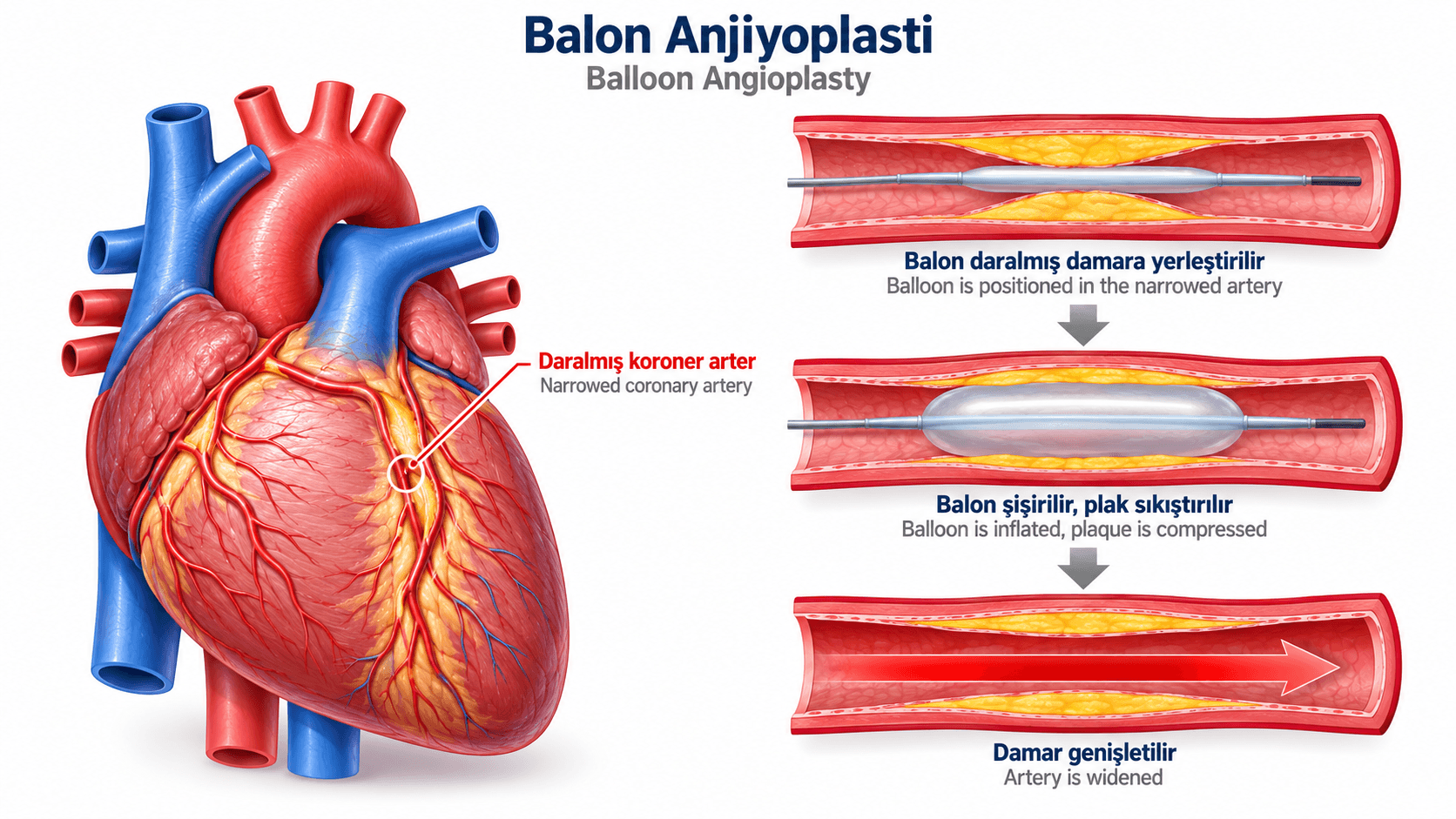
Coronary angioplasty is a catheter-based treatment method performed to open significant narrowing or blockages in the arteries supplying the heart and restore blood flow to the heart. During the procedure, a thin catheter is advanced to the narrowed segment of the artery. A small balloon at the tip of the catheter is then inflated to widen the artery.
- Catheter-Based
- Method
- Local Anesthesia
- Anesthesia Type
- Usually a Short Stay
- Hospital Stay
Who Is Coronary Angioplasty Performed For?
Today, a stent is also placed in most angioplasty procedures to help keep the artery open. Coronary angioplasty can be performed both in emergencies such as a heart attack and as a planned procedure in suitable patients.
What Does Coronary Angioplasty Involve?
Coronary angioplasty is a procedure performed in the catheterization laboratory that combines diagnostic and treatment steps. The procedure generally includes the following steps.
Included
- Imaging the location, length, and severity of the narrowing with coronary angiography
- Widening the narrowed segment of the artery with a balloon catheter
- Placing a stent when deemed necessary
- Assessing the clinical significance of the narrowing with additional techniques such as pressure and flow measurements
- Monitoring heart rhythm and hemodynamic status during the procedure
- Arranging antiplatelet medication therapy after the procedure
Not included
- This procedure differs from diagnostic coronary angiography, which serves imaging purposes only; diagnostic angiography shows the narrowing, while angioplasty treats the narrowing that is found.
- Coronary bypass surgery (CABG) is not within the scope of this procedure; a separate surgical evaluation process may be required in multi-vessel or anatomically complex involvement.
Assessment and Approach
When planning coronary angioplasty, various clinical factors are taken into account regarding the suitability and safety of the procedure.
Angiographic Assessment
Anatomical features such as the location and length of the narrowing and the vessel diameter are examined in detail using imaging methods.
Review of Coexisting Conditions
Factors that may affect general health status, such as kidney function, diabetes, and bleeding risk, are assessed before the procedure.
Selection of the Appropriate Technique and Materials
The type of balloon and stent to be used is determined based on the characteristics of the narrowing and the anatomical structure of the artery.
Post-Procedure Monitoring
The catheter access site, heart rhythm, and overall clinical status are closely monitored after the procedure.
How Long Does the Procedure Take?
The procedure usually takes 30–60 minutes, and patients are mostly discharged the following day.
Clinical Suitability Assessment
The suitability of coronary angioplasty is determined by evaluating clinical factors such as the following together.
Coronary Anatomy and Characteristics of the Narrowing
The affected artery, the length of the narrowing, its angulation, and the degree of calcification are decisive factors in the assessment.
General Health Status
Kidney function, bleeding risk, and coexisting chronic conditions are taken into account in procedure planning.
Previous Test and Imaging Results
ECG, echocardiography, and, if available, previous angiography findings are included in the assessment process.
Materials and Technique to Be Used
The stent type and, if necessary, the need for additional imaging or pressure measurement methods are determined on a case-by-case basis.
The information provided here is for general informational purposes; the diagnosis and treatment plan are determined following an individualized assessment.
Frequently asked questions about Interventional Cardiology
Coronary angioplasty is an interventional cardiology procedure that opens narrowed or blocked segments of the coronary arteries supplying the heart via a catheter, usually using a balloon and, when needed, a stent.
This procedure is performed to restore blood flow when narrowing in the coronary arteries reduces blood flow to the heart and leads to related complaints or a clinical condition.
If a clinically significant coronary narrowing is detected on angiography or other tests and this narrowing is found to be related to your complaints or clinical condition, it may be recommended by your physician as part of the evaluation. The final decision is made based on your individual examination and test results.
The procedure is performed with the guidance of angiographic imaging via a thin catheter inserted through the groin or wrist; the narrowed segment is widened with a balloon and a stent is placed if deemed necessary.
No. Angioplasty refers to widening the artery with a balloon, while a stent is a support structure that may be placed during this procedure to keep the artery open. A stent is not necessarily used in every angioplasty.
After the procedure, the condition of the catheter access site is monitored; regular use of prescribed medications (particularly antiplatelet therapy) is important, and attending the scheduled follow-up appointments is recommended.
Get in touch with us for an evaluation
Send your appointment request; we'll let you know about the evaluation process suited to your complaint and needs.