
ECG – What Is an Electrocardiogram?
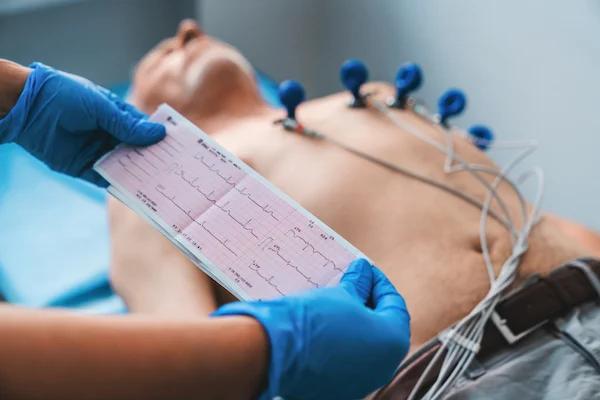
An ECG is a quick, painless test that records the heart's electrical activity. It helps detect heart rhythm disorders, problems in the heart's electrical conduction, and certain heart conditions.
- A Few Minutes
- Test Duration
- Non-invasive
- Method
- Immediate
- Result Time
Who Needs an ECG, and When?
An ECG is one of the first diagnostic methods commonly used to investigate heart-related complaints. The situations below are example scenarios in which this test may be considered; the final decision depends on the patient's individual examination.
Patients with Palpitations
It may be requested when the heartbeat is felt as irregular, fast, or forceful, in order to evaluate the electrical recording of the rhythm at that moment.
Chest Pain or a Feeling of Pressure in the Chest
In patients presenting with chest pain, pressure, or tightness, it may be used as one of the first-line tests to investigate whether there are signs of ischemia or other findings in the heart's electrical activity.
Dizziness, Fainting, or Shortness of Breath
It may be requested for complaints such as unexplained dizziness, a feeling of fainting, or shortness of breath, to evaluate whether there is an underlying rhythm or conduction problem.
Routine Cardiology Check-ups and Pre-operative Evaluation
It may be used as a standard screening test in general health check-ups, pre-operative preparation processes, or the regular follow-up of patients with known heart disease.
Difference Between ECG and Holter ECG
ECG (Standard, One-Time Recording)
Captures the heart's electrical activity at a specific moment, within a few minutes; it shows rhythm and conduction problems present at that moment.
Holter ECG (24-72 Hour Continuous Recording)
Records the heart rhythm over a longer period; it is more effective at detecting intermittent rhythm disorders that may not be captured during a standard ECG.
What Does an ECG Cover?
The ECG procedure covers the standard steps for recording the heart's electrical activity.
Included
- Placement of electrodes on the chest, arms, and legs
- Recording the heart's electrical signals for a period of a few seconds to one minute
- Evaluation of heart rate and rhythm pattern
- Examination of findings related to delays or blocks in the heart's electrical conduction system
- Screening for changes that may indicate a prior heart attack or ischemia
Not included
- An ECG does not image the heart's structure (chambers, valves); an echocardiogram (echo) is required for this purpose.
- A standard ECG may be insufficient for capturing intermittent, short-lived rhythm disorders; in such cases, long-term recording methods such as Holter ECG are considered.
- It does not evaluate the heart's response during exercise; an exercise stress test is used for this purpose.
Assessment and Approach
Although the ECG is a simple test, correct interpretation of the result requires a specific clinical assessment process.
Correct Electrode Placement
Care is taken to place the electrodes correctly in standard positions to ensure recording quality and accuracy of the result.
Assessment Together with Medical History
ECG findings are evaluated as a whole, together with the patient's complaints, past cardiac history, and current medications.
Comparison with Previous Recordings
Where possible, the current ECG result is compared with the patient's previous ECG recordings, if any, to evaluate changes.
Referral for Further Testing When Needed
If a suspicious finding is detected on the ECG, it is evaluated whether further tests such as echocardiography, Holter ECG, or an exercise stress test are needed.
How Is an ECG Performed?
An ECG is a simple procedure that takes little time and consists of specific steps.
- 01
Before the Test
Preparation
The patient lies down on the examination table; the areas on the chest, arms, and legs where electrodes will be placed are exposed.
- 02
Start of the Test
Placement of Electrodes
Small adhesive electrodes are placed on the skin and connected to the device.
- 03
During the Test
Recording
While the patient remains still and calm, the heart's electrical activity is recorded for a period of a few seconds to one minute.
- 04
After the Test
Assessment
The electrodes are removed; the recording obtained is evaluated by the physician and shared with the patient.
Factors That Affect the Assessment
The scope of the ECG assessment and any additional tests considered necessary are shaped by individual factors such as those below.
Presenting Complaint
The complaint the patient presents with — such as palpitations, chest pain, or fainting — determines the focus of the assessment.
Known History of Heart Disease
Whether the patient has a previously diagnosed heart condition or risk factor (such as hypertension or diabetes) affects the assessment.
Frequency and Timing of Complaints
Whether the complaints occur continuously or intermittently is an important factor in determining the need for additional testing.
Previous Test Results
Any previous ECG, echocardiogram, or laboratory results are included in the current assessment.
The information here is for general informational purposes only; the diagnosis and treatment plan are determined based on an individual assessment.
Frequently asked questions about Diagnostic Cardiology
An ECG (electrocardiogram) is a quick, painless test in which the electrical signals generated by the heart with each beat are recorded using electrodes placed on the skin. It shows the heart's rhythm and electrical conduction pattern.
It may be performed to investigate complaints such as palpitations, chest pain, dizziness, or fainting, to evaluate rhythm disorders and conduction problems, or as part of routine cardiology check-ups.
It may be recommended if you have a heart-related complaint, or if your heart's electrical activity needs to be evaluated as part of a general health check-up. This recommendation is based on the individual assessment your physician will make with you.
No. An ECG is a painless procedure performed using electrodes placed on the skin; it does not involve needles or incisions.
The ECG recording is completed within a few minutes, and the result is generally evaluated by the physician and shared during the same visit.
No. An ECG provides a short recording at a specific moment, while a Holter ECG continuously records the heart rhythm for 24-72 hours or longer. Holter ECG is preferred for investigating intermittently occurring rhythm disorders.
Get in touch with us for an evaluation
Send your appointment request; we'll let you know about the evaluation process suited to your complaint and needs.