
Exercise Stress Test: Evaluating the Heart's Response During Exercise
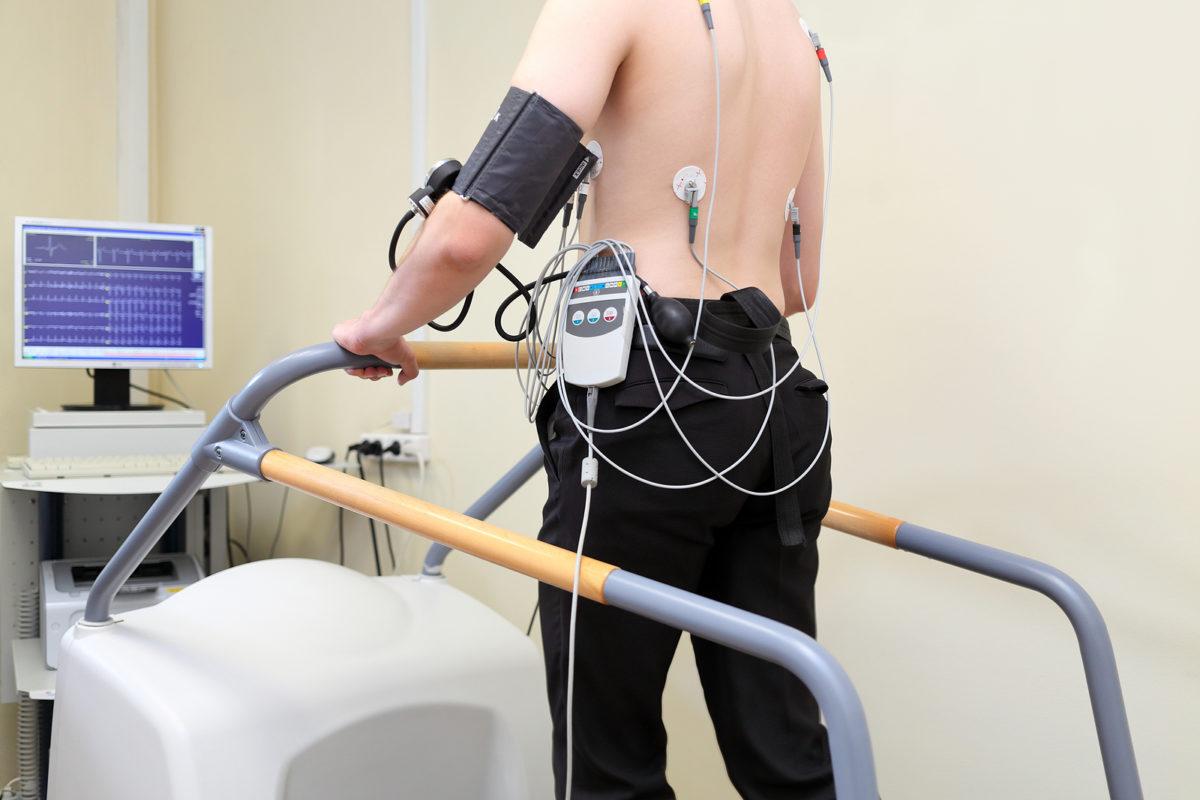
An exercise stress test is performed on a treadmill and evaluates how the heart functions during physical activity. It helps assess whether the heart receives sufficient blood flow during exercise and helps evaluate certain rhythm disorders.
- 10-20 Minutes
- Test Duration
- Graded Exercise
- Method
- Same Visit
- Result Time
Who Needs an Exercise Stress Test, and When?
An exercise stress test may be considered to investigate heart-related findings that do not appear at rest but become apparent during physical activity. The situations below are example scenarios in which this test may be considered; the final decision depends on the patient's individual examination.
What Is an Exercise Stress Test (Treadmill Test)?
It may be requested to investigate chest pain that occurs during physical activity such as walking or climbing stairs and resolves with rest.
Unexplained Shortness of Breath
It may be used for complaints of shortness of breath that worsens with exertion and cannot be explained by another cause, to evaluate the heart's response to exercise.
Suspected Exercise-Induced Rhythm Disorder
For palpitation-like complaints that occur during physical activity, it may be considered to investigate rhythm disorders that could be triggered by exertion.
Assessment of Exercise Capacity in Known Coronary Artery Disease
In patients previously diagnosed with coronary artery disease, it may be used to monitor exercise capacity and symptoms after treatment.
Difference Between an Exercise Stress Test and Holter ECG
Exercise Stress Test
Evaluates the heart's response over a short period during gradually increasing exercise in a controlled treadmill setting.
Holter ECG
Continuously records the heart rhythm for 24-72 hours during daily life without requiring any controlled exercise; it is more effective at capturing intermittently occurring rhythm disorders.
What Does an Exercise Stress Test Cover?
An exercise stress test is a planned monitoring process covering the periods before, during, and after exercise.
Included
- Recording a resting ECG and blood pressure before the test
- Applying an exercise protocol on the treadmill with gradually increasing speed and incline
- Continuous monitoring of ECG, heart rate, and blood pressure throughout the exercise
- Recording any complaints that arise during exercise (chest pain, shortness of breath, fatigue)
- Continued monitoring of heart rate and ECG during the recovery period after the test
Not included
- An exercise stress test does not directly image the structure of the coronary arteries; coronary angiography or CT coronary angiography is required for vessel imaging.
- It does not evaluate the heart's structural features (chambers, valves); echocardiography is used for this purpose.
- It may be insufficient for capturing rhythm disorders that occur intermittently during daily life; in such cases, Holter ECG is considered.
Assessment and Approach
An exercise stress test includes specific assessment and monitoring steps to ensure it can be performed safely.
Pre-Test Suitability Assessment
The patient's general health status, current complaints, and any limitations are assessed beforehand to ensure the test can be performed safely.
Performed Under Continuous Monitoring
ECG, heart rate, and blood pressure are continuously monitored throughout the test so that any abnormal response is closely tracked.
Observance of Stopping Criteria
The test may be stopped for safety reasons if the target heart rate is reached, a complaint develops, or certain ECG changes occur.
Monitoring of the Recovery Period
After exercise ends, the return of heart rate and ECG to normal is monitored for a further period.
How Is an Exercise Stress Test Performed?
An exercise stress test is a planned procedure that includes specific preparation, exercise, and recovery phases.
- 01
Before the Test
Pre-Assessment
A resting ECG is taken, blood pressure is measured, and the test protocol is explained to the patient.
- 02
Start of the Test
Starting Exercise
The patient steps onto the treadmill; the test begins at a low speed and incline, which are gradually increased.
- 03
During the Test
Monitoring During Exercise
ECG, heart rate, and blood pressure are continuously monitored, and any complaints felt by the patient are recorded.
- 04
After the Test
Recovery and Assessment
Exercise is stopped and the recovery period is monitored; the findings obtained are evaluated by the physician and shared with the patient.
Factors That Affect the Assessment
The feasibility and protocol of the exercise stress test are determined by taking into account individual factors such as those below.
General Exercise Capacity
The patient's age, physical fitness, and whether there are any movement limitations are taken into account when planning the test protocol.
Accompanying Health Issues
Issues related to the joints, musculoskeletal system, or respiratory system may affect the feasibility of the test.
Nature of the Presenting Complaint
The complaint the patient presents with — such as chest pain, shortness of breath, or palpitations — determines the focus of the assessment.
Previous Cardiac History and Test Results
A known history of coronary artery disease and any previous ECG or echo results are included in the assessment.
The information here is for general informational purposes only; the diagnosis and treatment plan are determined based on an individual assessment.
Frequently asked questions about Diagnostic Cardiology
An exercise stress test is a diagnostic method in which the heart's electrical activity, heart rate, and blood pressure are monitored during gradually increasing exercise on a treadmill. It evaluates the heart's response to physical exertion.
It is performed to investigate chest pain or shortness of breath that occurs with exertion, to evaluate rhythm disorders that may be triggered by exercise, or to monitor exercise capacity in known coronary artery disease.
It may be recommended if you have chest pain or shortness of breath that occurs with exertion, such as walking or climbing stairs, in order to evaluate the heart's response during exercise. This recommendation is based on the individual assessment your physician will make with you.
An exercise stress test is a controlled procedure performed under continuous ECG, heart rate, and blood pressure monitoring, with defined stopping criteria observed.
The exercise portion generally lasts between 10 and 20 minutes; the total time may be somewhat longer when preparation and recovery are included.
No. An exercise stress test evaluates the heart's response during controlled exercise, while Holter ECG investigates intermittently occurring rhythm disorders by continuously recording the rhythm during daily life.
Get in touch with us for an evaluation
Send your appointment request; we'll let you know about the evaluation process suited to your complaint and needs.