
LAAO: Left Atrial Appendage Occlusion
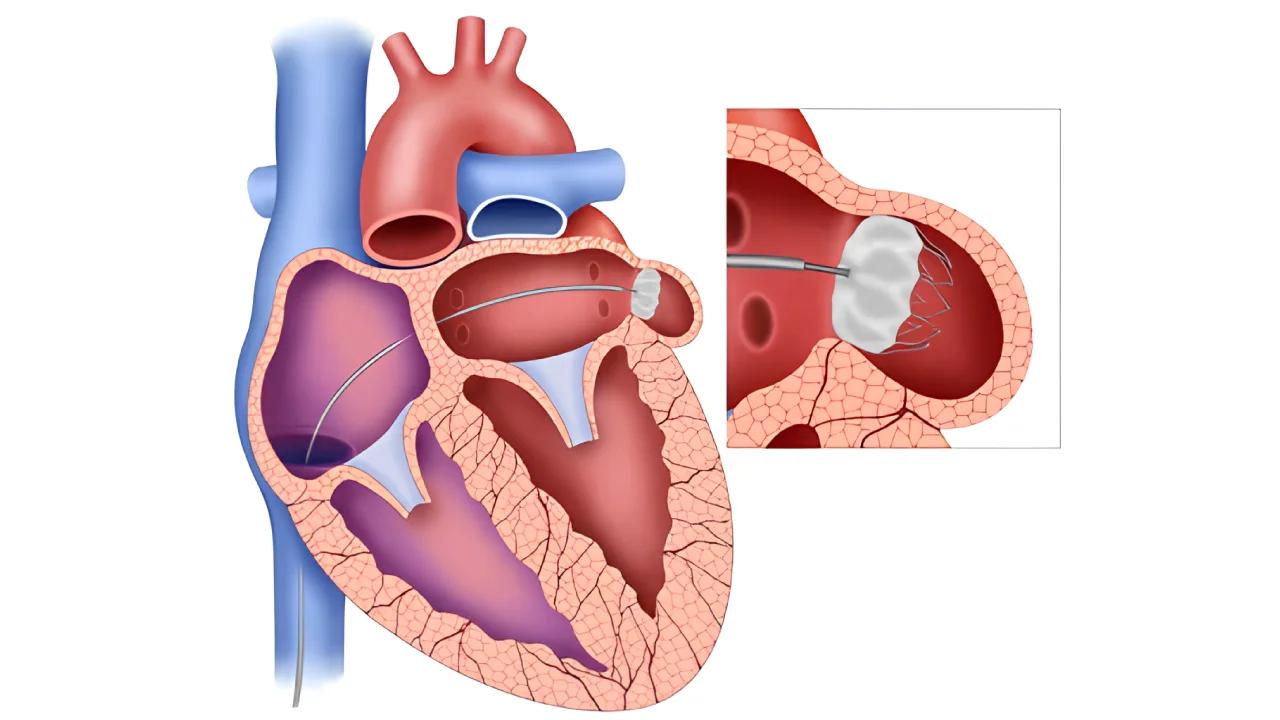
LAAO (Left Atrial Appendage Occlusion) is a procedure considered in selected patients with atrial fibrillation who are not suitable for long-term blood-thinning (anticoagulant) therapy or who have a high bleeding risk. The goal is to close the left atrial appendage — considered responsible for a large proportion of strokes related to atrial fibrillation — using a specialized device (occluder) delivered via a catheter. The procedure is generally performed via the groin, guided by transesophageal echocardiography (TEE). The suitability of the method is determined by jointly assessing many factors, particularly the patient's stroke and bleeding risk profile.
- 1-2 Hours
- Procedure Duration
- Sedation/General Anesthesia
- Anesthesia Type
- 1-2 Days
- Discharge
Who Needs LAAO, and When?
LAAO may be considered in selected patients with atrial fibrillation who have certain limitations related to long-term anticoagulant therapy.
Patients Not Suitable for Anticoagulant Therapy
LAAO may be considered as an option in atrial fibrillation patients who cannot use blood-thinning medications long-term for specific medical reasons.
Patients at High Bleeding Risk
It may be considered in patients with a history of serious bleeding or other health issues that increase bleeding risk.
Stroke History Despite Anticoagulant Therapy
It may be considered as an additional protective measure in selected patients who have had a stroke or systemic embolism despite appropriate anticoagulant therapy.
Patients Having Difficulty with Medication Adherence or Monitoring
It may be considered as an alternative approach in patients who have difficulty with the regular monitoring required for long-term anticoagulant therapy.
What Does LAAO Involve?
LAAO implantation involves specific steps, from pre-procedure imaging to device placement.
Included
- Detailed assessment of left atrial appendage anatomy with transesophageal echocardiography
- Assessment of stroke and bleeding risk using clinical scoring methods
- Advancing the catheter from the right atrium to the left atrium via the groin
- Placing the occluder device at the ostium of the left atrial appendage
- Confirming device position with imaging
- Post-procedure medication and regular imaging follow-up
Not included
- LAAO does not treat atrial fibrillation itself; a separate assessment and treatment plan for the rhythm disorder may be required.
- The procedure does not mean anticoagulant therapy is fully discontinued in every patient; post-procedure medication use is determined by the physician.
Assessment and Approach
Care is taken with the following points during LAAO assessment and the implantation process.
Detailed Anatomical Assessment with Imaging
The size, shape, and anatomy of the left atrial appendage are examined in detail with transesophageal echocardiography.
Joint Assessment of Stroke and Bleeding Risk
The patient's stroke risk is assessed together with bleeding risk to decide on the suitability of the procedure.
Imaging Guidance During the Procedure
Correct device placement is confirmed with imaging methods throughout the procedure.
Post-Procedure Medication and Imaging Follow-up
After the procedure, device position and effectiveness are monitored through the prescribed medication regimen and regular imaging checks.
The LAAO Procedure Process
LAAO implantation consists of specific stages, from initial assessment to post-procedure follow-up.
- 01
Imaging and Risk Assessment
Initial Assessment
Left atrial appendage anatomy and the patient's stroke/bleeding risk are assessed with transesophageal echocardiography.
- 02
Planning
Pre-Procedure Planning
The appropriate device size and access route are planned.
- 03
Under Sedation/General Anesthesia
Device Placement
Access is obtained via the groin, the catheter is advanced to the left atrium, and the occluder device is placed in the left atrial appendage.
- 04
After the Procedure
Observation and Follow-up
After the procedure, the patient is kept under observation, and medication and imaging follow-up are planned.
Clinical Factors Affecting the Assessment
The suitability of LAAO is based on the combined assessment of the following clinical factors.
Level of Stroke Risk
Stroke risk, as determined by clinical scoring methods, is one of the key reference points in assessing the need for the procedure.
Bleeding Risk and Anticoagulant Suitability
The patient's suitability for long-term blood-thinning therapy and bleeding risk are an important part of the assessment process.
Left Atrial Appendage Anatomy
The size and shape of the appendage affect the choice of an appropriate device and the technical feasibility of the procedure.
Coexisting Conditions and General Health
Other chronic conditions and general health status are taken into account in procedure planning.
The information here is for general informational purposes; the diagnosis and treatment plan are determined following an individualized assessment.
Frequently asked questions about Interventional Electrophysiology
LAAO is a procedure aimed at closing the left atrial appendage — considered responsible for a large proportion of stroke risk related to atrial fibrillation — with a specialized device delivered by catheter.
It may be considered in selected patients with atrial fibrillation who are not suitable for long-term blood-thinning therapy or who have a high bleeding risk.
The procedure is generally performed via the groin, guided by transesophageal echocardiography, with placement of a specialized occluder device in the left atrial appendage.
Post-procedure medication use is determined by the physician based on the patient's clinical condition; this decision requires an individualized assessment.
No; LAAO does not treat the rhythm disorder itself, but is an approach aimed at reducing stroke risk. A separate assessment for the rhythm disorder may be required.
Procedure time and discharge timing can vary from patient to patient; in general, a short period of observation and hospital stay follows the procedure.
Get in touch with us for an evaluation
Send your appointment request; we'll let you know about the evaluation process suited to your complaint and needs.