
What Is a Pacemaker?
A pacemaker is an electronic device used in certain patients whose heart beats too slowly or who have a problem with the heart's electrical conduction system. It continuously monitors the heart's rhythm and sends small electrical impulses when needed to help the heart beat at an appropriate rate.
- Local Anesthesia
- Anesthesia Type
- Subcutaneous Placement
- Implantation Method
- Usually a Short Stay
- Hospital Stay
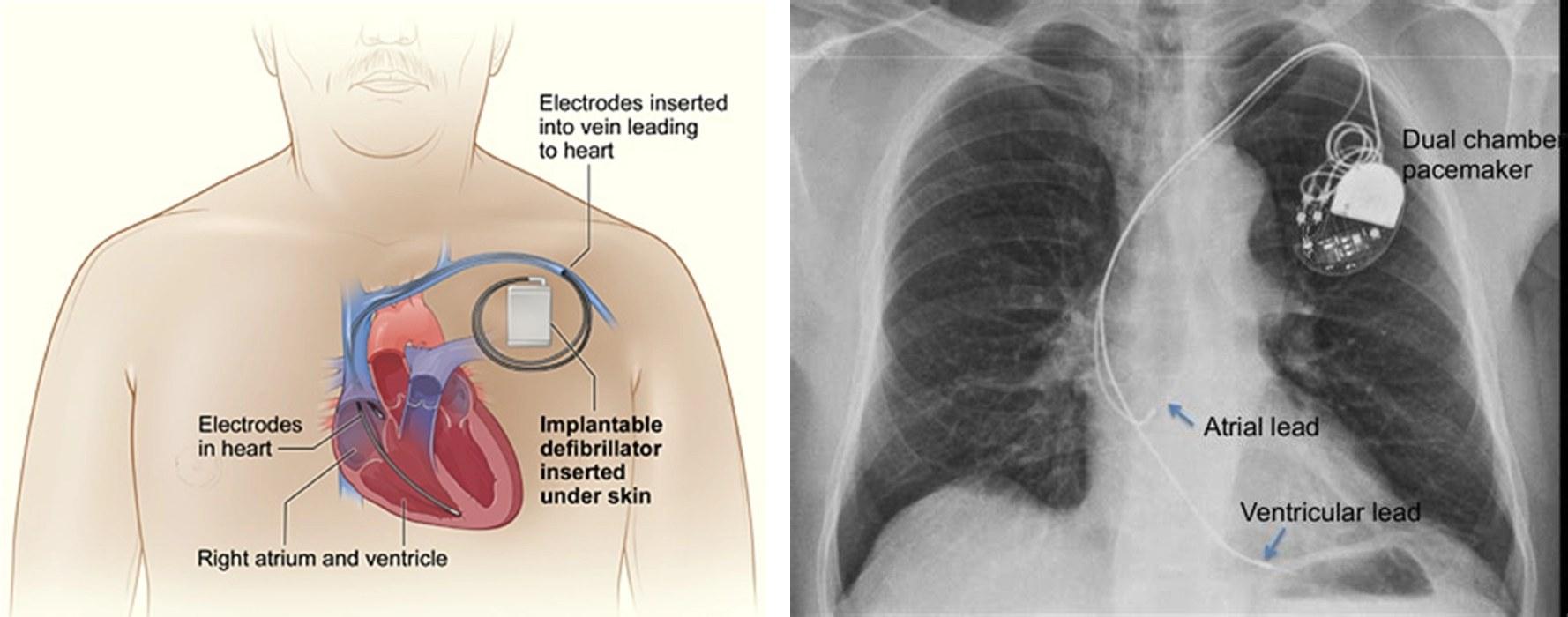
Which Pacemaker Systems Are Used?
Different pacemaker systems may be used depending on the patient's condition:
Single-chamber pacemaker
Dual-chamber pacemaker
Physiological pacemaker that follows the heart's natural electrical system
Specialized systems used in certain patients with heart failure
What Symptoms Can Pacemaker Therapy Help Improve?
Pacemaker therapy can particularly help with symptoms related to a slow heart rate, such as:
Included
- Dizziness
- Fatigue
- Getting tired easily
- Reduced exercise capacity
- Fainting
Not included
- may help improve such symptoms.
Assessment and Approach
The decision to use a pacemaker is made following a multi-faceted assessment process based on patient-specific findings.
Comprehensive Rhythm Assessment
Before the decision is made, the type and source of the rhythm disorder are examined in detail through tests such as ECG, Holter rhythm monitoring, and, when needed, electrophysiological evaluation.
Individualized Device Selection
The device type and programming approach are determined individually based on the patient's age, general health, and the characteristics of the rhythm disorder.
Sterile-Setting Implantation
The procedure is performed under sterile catheterization laboratory or operating room conditions to minimize the risk of infection.
Regular Check-ups and Follow-up
After the device is implanted, battery life, lead function, and rhythm recordings are checked at regular intervals; programming is updated when needed.
How Is the Procedure Performed?
The procedure is a minimally invasive method. It generally takes 30–60 minutes, and patients are usually discharged the following day.
Clinical Suitability Assessment
The suitability of pacemaker implantation is determined based on clinical factors that vary from patient to patient.
Type and Severity of the Rhythm Disorder
Whether the bradycardia is continuous or intermittent, its relationship with symptoms, and the underlying cause directly affect the assessment.
General Health and Coexisting Conditions
Non-cardiac systemic illnesses, prior heart conditions, and general health status are factors that influence the device decision.
Prior Test and Imaging Results
Existing test results such as ECG, Holter rhythm monitoring, and echocardiography serve as a reference in determining clinical suitability.
Medications Used and Anatomical Features
The medications the patient uses, particularly blood thinners, and vascular/cardiac anatomy can affect procedure planning.
The information here is for general informational purposes; the diagnosis and treatment plan are determined following an individualized assessment.
Frequently asked questions about Interventional Electrophysiology
A pacemaker is a small device placed under the skin that continuously monitors slowing in the heart's electrical conduction system and, when needed, sends an electrical impulse to prevent the heart rate from dropping below a certain level. The device does not activate if the heart's own rhythm is sufficient; it only provides support when needed.
In conditions such as bradycardia, sinus node dysfunction, or atrioventricular (AV) block, where the heart's natural electrical system runs slowly, the heart may not beat at an adequate rate. This can lead to symptoms such as fatigue, dizziness, palpitations, or fainting; a pacemaker helps support the rhythm in this situation.
If symptomatic bradycardia, advanced-degree AV block, or sinus node dysfunction is identified through ECG, Holter rhythm monitoring, or, when needed, electrophysiological evaluation, a pacemaker may be considered following specialist assessment. The decision is based on patient-specific findings.
The procedure is generally performed under local anesthesia. Lead wires are advanced through a vein from the area below the collarbone and placed in the heart; the pulse generator is positioned under the skin and programmed according to the patient's rhythm needs.
After the procedure, the patient is kept under observation for a period to check the device's function. Afterward, a follow-up program is carried out in which battery life, lead function, and rhythm recordings are evaluated at regular intervals.
A pacemaker is intended to support the rhythm in situations where the heart beats too slowly; an ICD (implantable cardioverter-defibrillator) is designed to detect fast, dangerous, potentially life-threatening rhythm disorders and correct them with an electrical shock. Which device is appropriate is determined through a separate assessment.
Get in touch with us for an evaluation
Send your appointment request; we'll let you know about the evaluation process suited to your complaint and needs.