
Percutaneous ASD Closure
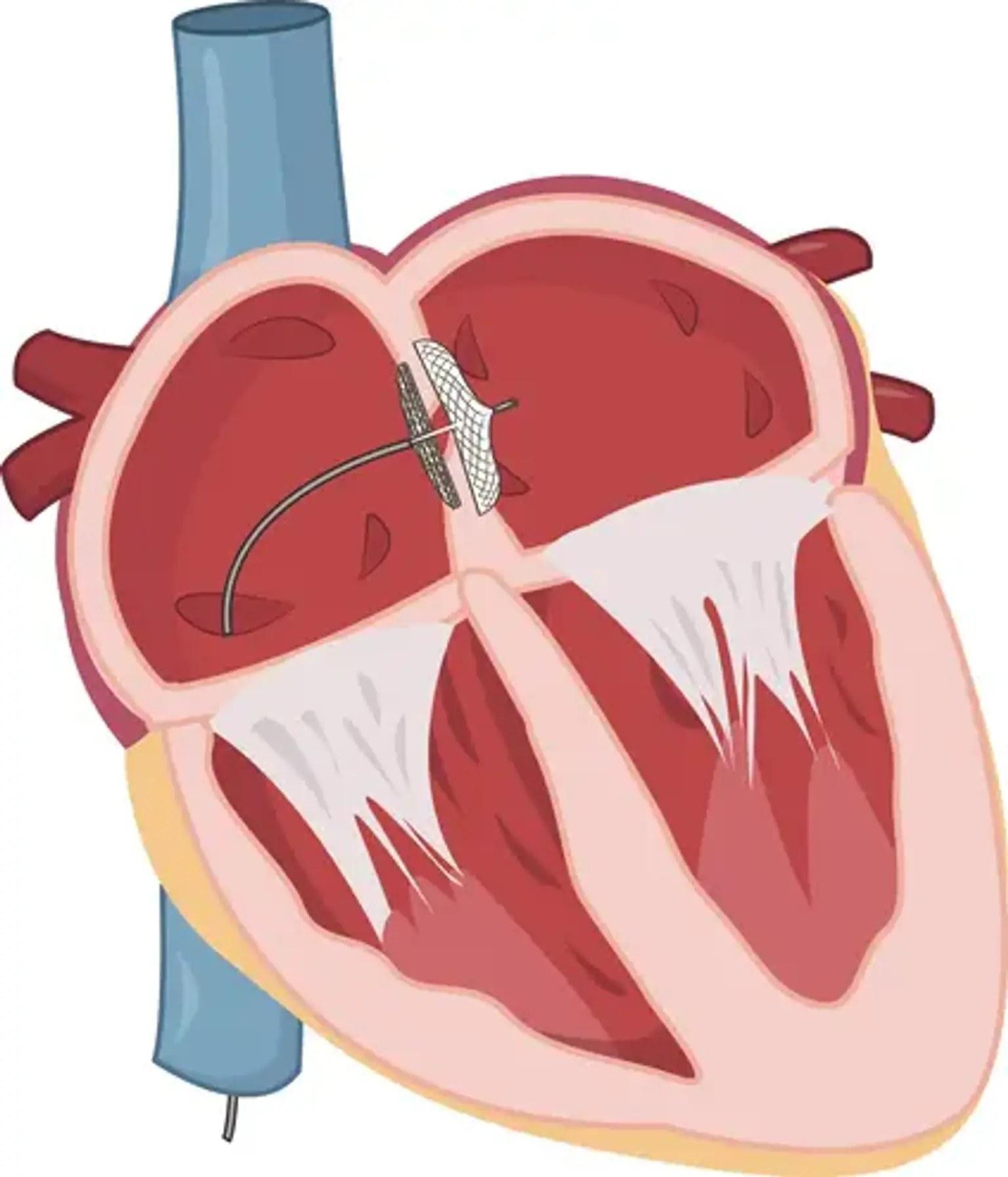
Atrial septal defect (ASD) is a congenital opening in the septum between the atria, the heart's upper chambers. In selected patients with suitable anatomy, this opening can be closed without the need for open-heart surgery, using a specialized closure device (occluder) delivered by a catheter advanced through a vein in the groin. The procedure is generally performed under transesophageal echocardiography guidance, taking into account the size of the defect and the surrounding tissue structure. In large or complex defects, or where anatomical suitability is not present, surgical closure may be required.
- 30-60 Minutes
- Procedure Duration
- Sedation / General Anesthesia
- Anesthesia Type
- 1 Day
- Hospital Stay
Who Needs Percutaneous ASD Closure, and When?
Percutaneous ASD closure may be considered in selected patients whose defect is found anatomically suitable for device closure and who have enlargement of the right heart chambers or symptoms.
ASD of Suitable Size and Location
The size of the defect and the structure of the surrounding tissue edges (rim) must be anatomically suitable for device closure.
Findings of Right Heart Chamber Enlargement
Closure may be considered in patients with right atrial and right ventricular enlargement detected on echocardiography.
Symptomatic Patients or Those at Risk of Future Complications
Patients with symptoms such as reduced exercise capacity, or those who carry a long-term risk of complications, fall within the scope of assessment.
Selected Patients Seeking an Alternative to Surgery
In patients whose anatomical suitability is confirmed, percutaneous closure may be considered as an alternative to open-heart surgery.
What Does Percutaneous ASD Closure Involve?
The procedure process involves specific steps, from initial assessment to device placement and subsequent follow-up.
Included
- Assessment of the defect's size, location, and rim structure with transthoracic and transesophageal echocardiography
- Determination of anatomical suitability for device closure
- Delivery and placement of the occluder device at the defect site via catheter
- Confirmation of device position with imaging during the procedure
- Post-procedure echocardiographic check
Not included
- Percutaneous closure may not be possible for defects that are large, complex, or have an unsuitable rim structure; surgical closure is considered in these cases.
- Other coexisting congenital heart anomalies may require a separate assessment.
Assessment and Approach
Care is taken with the following points during percutaneous ASD closure assessment and the implantation process.
Detailed Echocardiographic Assessment
The size, location, and surrounding tissue structure of the defect are examined in detail with transthoracic and transesophageal echocardiography.
Examination of the Defect Rim Structure
The adequacy of the tissue edges (rim) around the defect is assessed to ensure the device can be seated safely.
Assessment of the Right Heart Chambers
Right atrial and right ventricular size and function are taken into account in the procedure decision.
Post-Procedure Follow-up
Device position and closure outcome continue to be monitored with regular echocardiographic checks.
The Percutaneous ASD Closure Procedure Process
The procedure consists of specific stages, from initial assessment to discharge.
- 01
Anatomical Examination with Echocardiography
Initial Assessment
The defect's size, location, and rim structure are examined with echocardiography.
- 02
Device Size Planning
Pre-Procedure Preparation
The appropriate device size and access route are planned in advance.
- 03
Under Sedation / General Anesthesia
Device Placement
The occluder device, delivered by catheter, is placed at the defect site under transesophageal echocardiography guidance.
- 04
After the Procedure
Observation and Discharge
After the procedure, the patient is kept under observation, and discharge is planned after the device position is assessed.
Factors Affecting the Assessment
The suitability of percutaneous ASD closure is based on the combined assessment of the following clinical factors.
Size and Location of the Defect
The diameter of the defect and its position on the septum play a fundamental role in determining the appropriate device type and size.
Surrounding Tissue (Rim) Structure
The adequacy of the tissue edges around the defect is important for the device to be seated safely.
Condition of the Right Heart Chambers
Right atrial and right ventricular size and function are among the factors taken into account in the treatment decision.
Coexisting Heart Anomalies
The presence of other congenital heart anomalies is additionally assessed in procedure planning.
The information here is for general informational purposes; the diagnosis and treatment plan are determined following an individualized assessment.
Frequently asked questions about Interventional Cardiology
Percutaneous ASD closure is an interventional method that closes a congenital opening between the atria without surgery, using a specialized device delivered by catheter.
No; percutaneous closure can be performed in selected patients whose defect size, location, and surrounding tissue edge structure are suitable, while surgery may be required for large or complex defects.
The occluder device is delivered to the defect site via a catheter advanced through a vein in the groin and is generally placed under transesophageal echocardiography guidance.
The size, location, and rim structure of the defect are examined in detail with transthoracic and transesophageal echocardiography.
The procedure generally takes 30-60 minutes; patients can usually be discharged one day after the procedure.
The device's position and valve function continue to be monitored with regular echocardiographic checks.
Get in touch with us for an evaluation
Send your appointment request; we'll let you know about the evaluation process suited to your complaint and needs.