
What Is PVC / VES Ablation?
PVC or VES are heart beats originating from the ventricles that occur earlier than normal.
- 1–3 Hours
- Procedure Duration
- Sedation/Local Anesthesia
- Anesthesia Type
- The Following Day
- Discharge
How Do PVCs/VES Feel?
Patients may feel this in the following ways:
A momentary pause in the heartbeat
A strong, forceful heartbeat
A fluttering sensation in the chest
Irregular heartbeats
When Is Ablation Considered?
Occasional PVCs are quite common and usually do not require treatment. However, very frequent, recurring PVCs may cause symptoms in some patients or may contribute, over the long term, to a reduction in the heart's pumping capacity. Ablation may be considered in suitable patients where PVCs are very frequent, cause significant symptoms, or negatively affect the heart's pumping capacity.
Included
Not included
Evaluation and Approach
The following points are given attention during the PVC/VES ablation process.
Detailed Rhythm Evaluation
PVC burden, morphology, and its relationship with symptoms are evaluated in detail using Holter and ECG recordings.
Monitoring of Ventricular Function
Heart muscle function is assessed with echocardiography, and its relationship with PVCs is reviewed.
Focus Identification with Advanced Mapping Technology
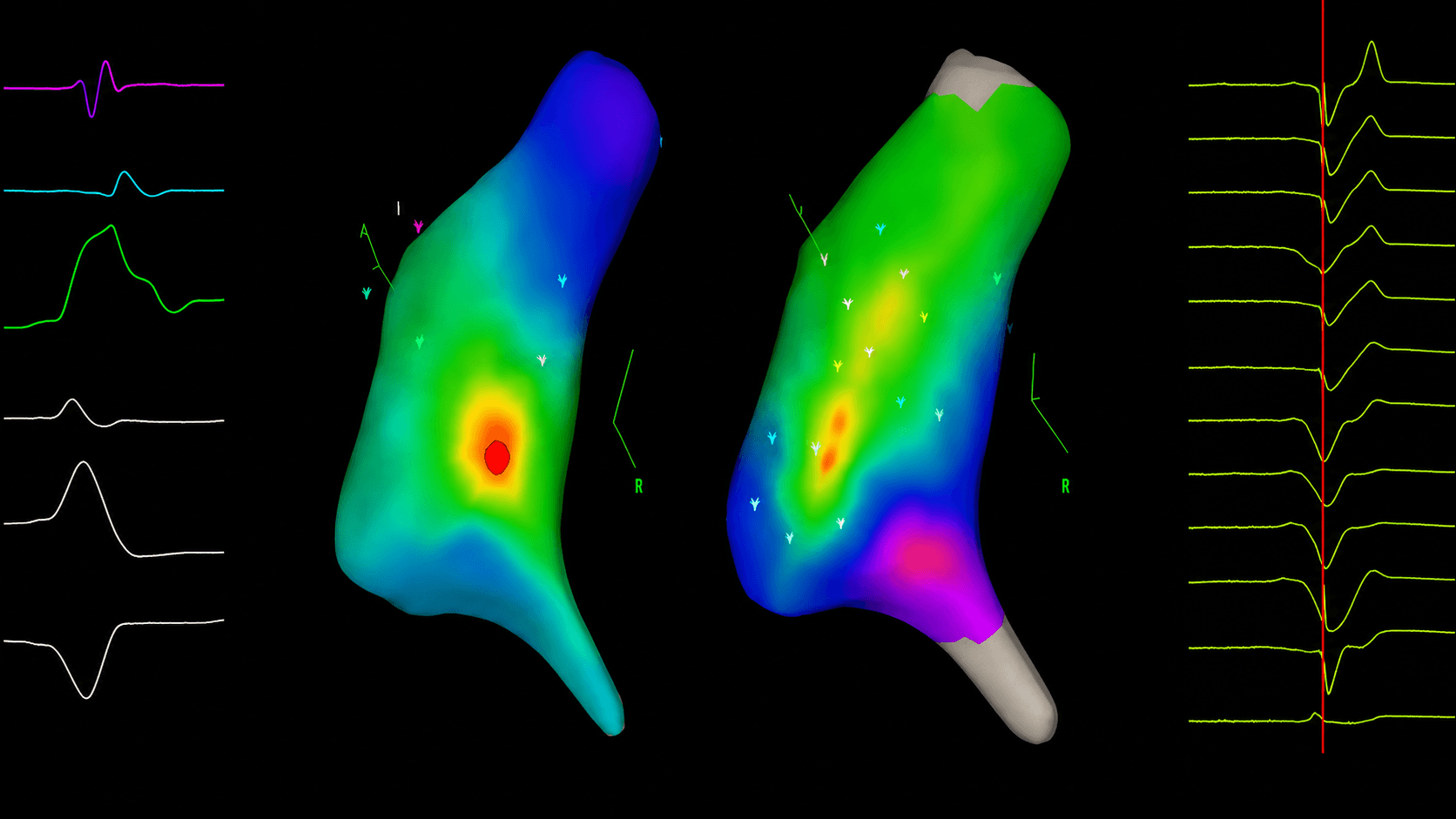
During electrophysiology study, advanced mapping technology is used to identify the area where the PVC originates.
Post-Procedure Rhythm Follow-Up
Treatment response is evaluated after the procedure using rhythm recordings.
How Long Does the Procedure Take?
PVC ablation generally takes 1–3 hours, and patients are mostly discharged the following day.
Clinical Factors Affecting the Evaluation
The scope of PVC/VES ablation is based on evaluating the following clinical factors together.
PVC Burden and Morphology
The PVC burden seen on Holter recording and its morphological characteristics play an important role in determining the need for, and strategy of, ablation.
Severity of Symptoms
The impact of the patient's symptoms on daily life is an important factor considered in the treatment decision.
Ventricular Function
Echocardiographic measurements are used to assess the effect of PVCs on the heart muscle.
Anatomical Location of the Focus
The location within the heart where the PVC originates can affect the technical difficulty and duration of the procedure.
The information here is for general informational purposes; the diagnosis and treatment plan are determined following an individualized evaluation.
Frequently asked questions about Interventional Electrophysiology
PVC (premature ventricular contraction) or VES (ventricular extrasystole) are early heartbeats originating from the ventricles, which may be perceived as a skipped beat, palpitation, or fluttering sensation.
No; occasional PVCs are common and generally do not require treatment. Ablation is considered for PVCs that recur frequently, cause significant symptoms, or affect ventricular function.
Electrophysiology study is used to map the focus where the PVC originates, and ablation is then applied to this area with radiofrequency energy.
The procedure generally takes about 1–3 hours, and patients are mostly discharged the following day.
Frequent, recurring PVCs may contribute to weakening of the heart muscle in some patients; for this reason, ventricular function should be monitored regularly in patients with a high PVC burden.
There may be a possibility of recurrence after ablation; this is monitored through individualized evaluation and regular rhythm follow-up.
Get in touch with us for an evaluation
Send your appointment request; we'll let you know about the evaluation process suited to your complaint and needs.