
What Is TAVI?
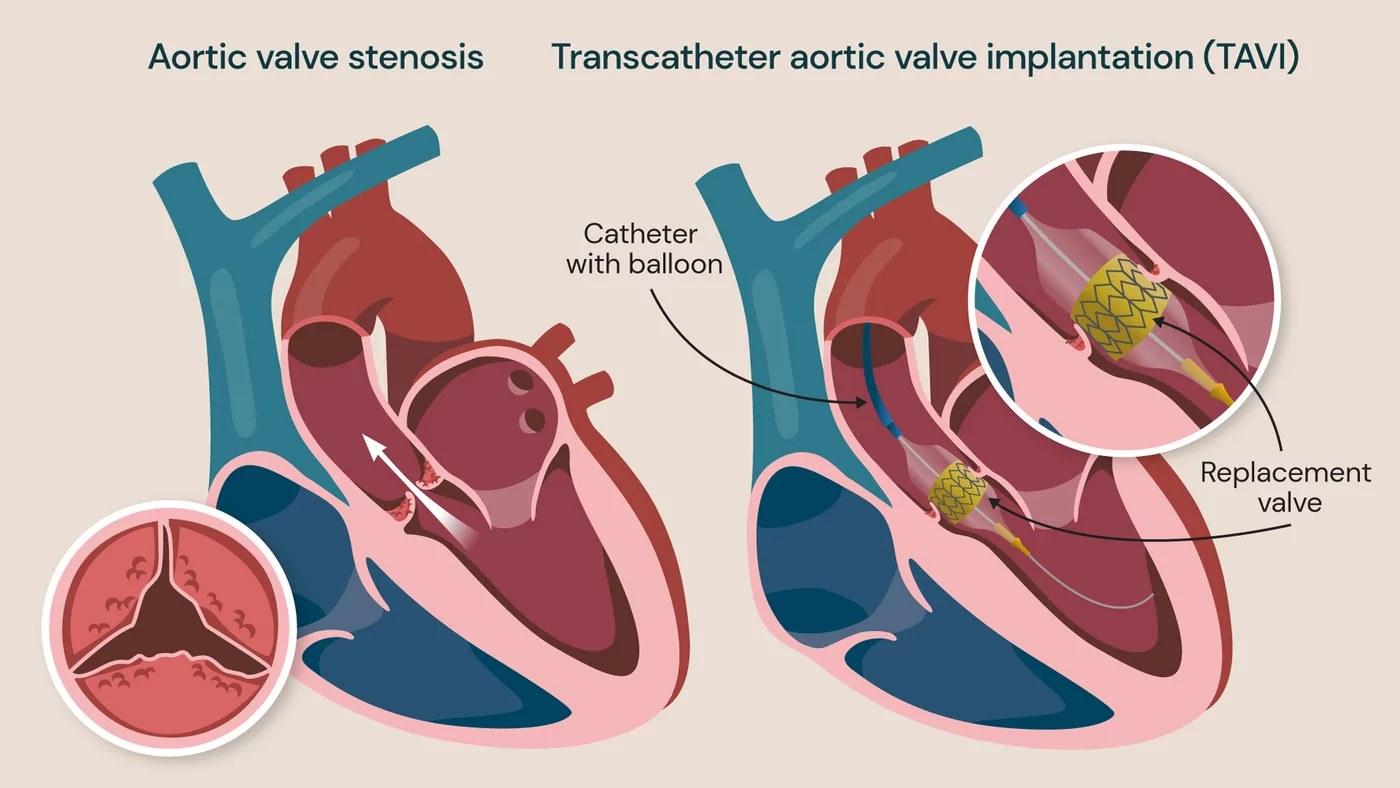
TAVI (Transcatheter Aortic Valve Implantation) is a minimally invasive method used to treat advanced aortic valve stenosis that does not require opening the chest. In conventional open-heart surgery, the aortic valve is removed and replaced, whereas in TAVI the new valve is delivered to the heart using a thin catheter.
- 60-90 Minutes
- Procedure Duration
- Sedation / General Anesthesia
- Anesthesia Type
- 2-3 Days
- Hospital Stay
How Is the Procedure Performed?
The new valve is usually advanced through a vessel in the groin (the femoral artery) to the heart and expanded inside the existing diseased valve. The chest is not opened, and most patients do not require a heart-lung machine. Depending on the patient's condition, the procedure may be performed under sedation (calming medication that induces drowsiness) or general anesthesia.
What Does TAVI Involve?
The TAVI process covers specific stages, from initial evaluation through valve placement and subsequent follow-up.
Included
- Detailed evaluation of the valve, root, and vascular access anatomy with echocardiography and CT angiography
- A joint decision-making process by the heart team (cardiologist and cardiac surgeon)
- Placement of the new valve via catheter, usually through the femoral artery
- Confirmation of valve position and function under imaging guidance during the procedure
- Post-procedure monitoring of rhythm, valve function, and the vascular access site
Not included
- TAVI may not be suitable for all patients with unfavorable anatomy or those requiring additional surgical intervention; in such cases, surgical valve replacement is considered.
- Concurrent conditions such as severe coronary artery disease may require separate procedural planning.
Evaluation and Approach
The following points are given careful attention during TAVI evaluation and the treatment process.
Heart Team Evaluation
The decision for TAVI is made by a team of a cardiologist and a cardiac surgeon, taking the patient's overall clinical picture into account.
Detailed Imaging
Valve structure, root diameter, and vascular access measurements are carefully examined with echocardiography and CT angiography.
Vascular Access Planning
The diameter and structure of the femoral artery are assessed beforehand to ensure the catheter can be advanced safely.
Post-Procedure Follow-Up
Valve function and rhythm continue to be monitored with regular check-ups after discharge.
The TAVI Procedure Process
The TAVI procedure consists of specific stages, from initial evaluation through discharge.
- 01
Imaging and Heart Team Evaluation
Initial Evaluation
Valve and vascular access anatomy are examined with echocardiography and CT angiography, and the heart team makes a joint decision.
- 02
Planning
Pre-Procedure Preparation
The access route, valve size, and anesthesia approach are planned in advance.
- 03
Under Sedation / General Anesthesia
Valve Placement
The new valve, advanced via catheter, is positioned inside the damaged valve under imaging guidance and expanded.
- 04
Post-Procedure
Observation and Discharge
After the procedure, the patient is kept under observation; discharge is planned once valve function and rhythm have been assessed.
Factors Affecting the Evaluation
The decision between TAVI and open-heart surgical valve replacement is made on an individual basis, taking into account the patient's age, general health status, heart valve structure, surgical risk, life expectancy, and personal preferences.
Age and General Health Status
Heart Valve Structure
Surgical Risk
Life Expectancy and Personal Preferences
The procedure usually takes 60–90 minutes, and patients are generally discharged after 2–3 days.
Frequently asked questions about Structural Heart Interventions
TAVI is an interventional treatment method that allows a new valve to be placed via catheter in patients with severe aortic valve stenosis, without the need for open-heart surgery.
TAVI is considered for selected patients diagnosed with severe aortic stenosis who are symptomatic, anatomically suitable, and particularly those considered to be at high surgical risk.
The procedure is usually performed through the femoral artery in the groin; the new valve, delivered by catheter, is positioned inside the damaged valve under imaging guidance and expanded.
TAVI is performed via catheter without opening the chest, whereas surgical valve replacement requires open-heart surgery and a heart-lung machine. The choice is determined by the patient's anatomy and risk profile.
After the procedure, patients are generally kept under observation and may be discharged within a few days, depending on their clinical course.
After discharge, valve function and rhythm continue to be monitored at regular intervals with echocardiography and ECG.
Get in touch with us for an evaluation
Send your appointment request; we'll let you know about the evaluation process suited to your complaint and needs.