
What Is TricValve?
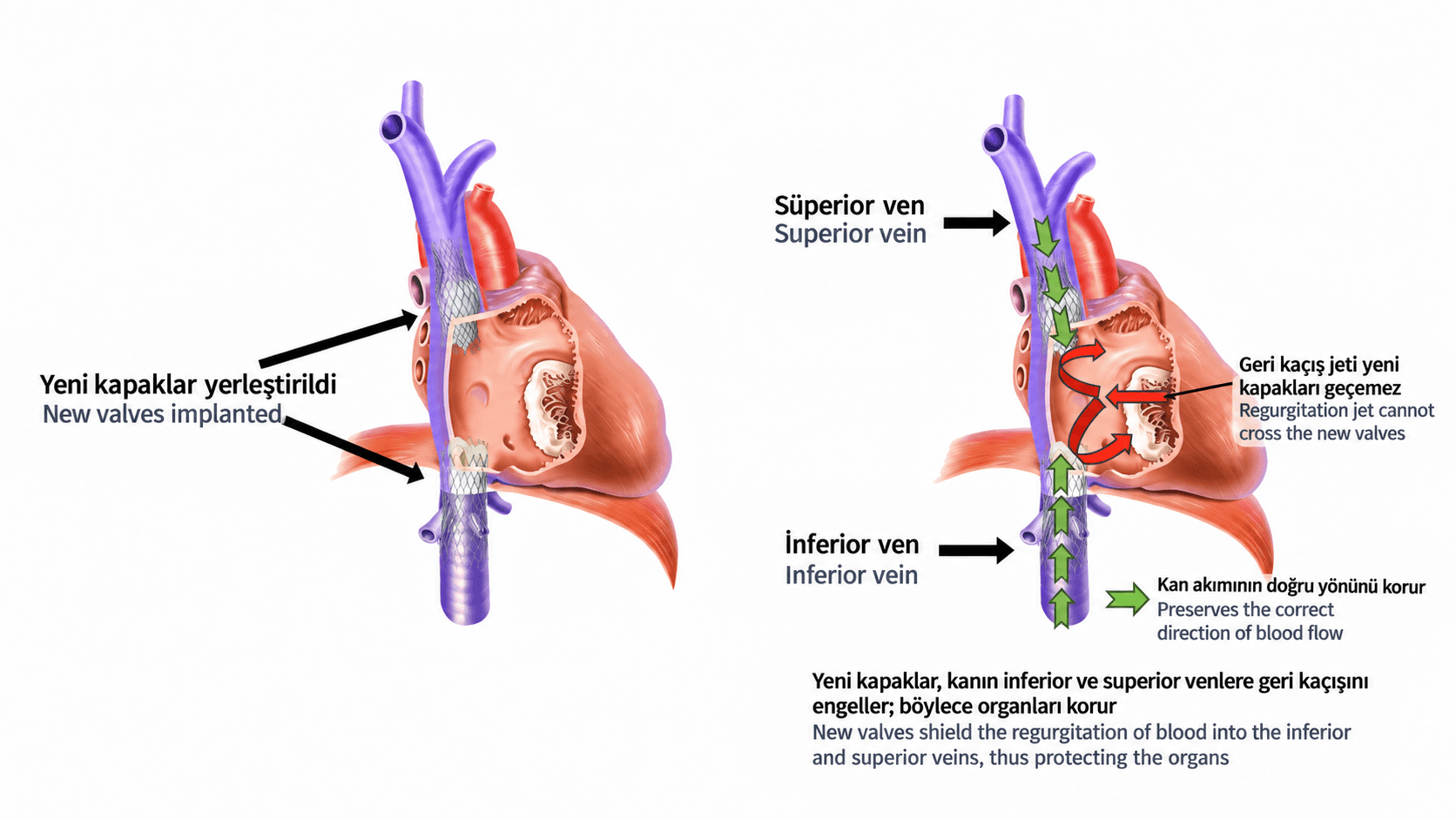
TricValve is a minimally invasive, catheter-based treatment method used in some patients with severe tricuspid valve regurgitation who are at high risk for open-heart surgery. In this method, the tricuspid valve itself is not directly repaired or replaced. Instead, special valves are placed in the inferior vena cava (IVC) and/or superior vena cava (SVC).
- ~60 Minutes
- Procedure Duration
- General Anesthesia / Sedation
- Anesthesia Type
- Next Day
- Discharge
Who May Be a Candidate?
These valves help reduce the backward flow of blood into the veins caused by tricuspid valve regurgitation. This can help reduce venous pressure and fluid accumulation in the body. TricValve may be considered, in particular, for the following selected patients:
Advanced tricuspid valve regurgitation
Pronounced symptoms due to right heart failure
Significant venous pressure and fluid accumulation in the body
High or very high risk for open-heart surgery
Anatomy suitable for valve placement within the vein
Potential Benefits
Potential benefits of TricValve:
Included
- May reduce backward blood flow into the veins
- May reduce venous pressure and fluid accumulation
- May reduce swelling in the legs and abdomen
- May improve symptoms and quality of life
- May offer a minimally invasive option for patients who are not candidates for open-heart surgery
Not included
In Summary
Caval Valve Implantation (CAVI) is one of the new-generation catheter-based treatment methods used in selected patients with advanced tricuspid valve regurgitation and associated significant venous pressure.
The TriValve (CAVI) Procedure Process
The CAVI procedure consists of specific stages, from initial evaluation through discharge.
- 01
Imaging and Heart Team Evaluation
Initial Evaluation
Tricuspid regurgitation and caval anatomy are examined with echocardiography and imaging, and the heart team makes a joint decision.
- 02
Planning
Pre-Procedure Preparation
Valve size and access route are planned in advance.
- 03
Under General Anesthesia / Sedation
Valve Placement
Transcatheter valves are placed in the inferior and/or superior vena cava via catheter.
- 04
Post-Procedure
Observation and Discharge
After the procedure, the patient is kept under observation, and venous pressure and symptoms are assessed.
Factors Affecting the Evaluation
The treatment decision is made by assessing the patient's vascular structure, the severity of tricuspid valve regurgitation, right ventricular function, pulmonary vascular pressure, and general health status.
Vascular Structure
Severity of Tricuspid Valve Regurgitation
Right Ventricular Function
Pulmonary Vascular Pressure
The procedure takes approximately 60 minutes, and patients are generally discharged the following day.
Frequently asked questions about Structural Heart Interventions
TriValve (CAVI) is a treatment approach in which transcatheter valves are placed in the inferior and/or superior vena cava in patients with severe tricuspid regurgitation who are considered to be at high surgical risk.
No; CAVI does not repair or replace the tricuspid valve itself. Instead, it helps limit the backward flow of blood by placing valves in the caval veins.
It is considered for selected patients with severe tricuspid regurgitation, pronounced symptoms of right heart failure, high surgical risk, and suitable caval anatomy.
Transcatheter valves are placed in the inferior and/or superior vena cava via catheter; the procedure is performed under imaging guidance.
The procedure may help reduce systemic venous congestion, decrease leg and abdominal swelling, and relieve symptoms.
Right heart function and venous pressure continue to be monitored with regular check-ups after discharge.
Get in touch with us for an evaluation
Send your appointment request; we'll let you know about the evaluation process suited to your complaint and needs.