
What Is VT Ablation?
Ventricular tachycardia (VT) is a fast and serious rhythm disorder originating from the heart's ventricles. It can occur in people who have had a heart attack, have damage to the heart muscle, have cardiomyopathy, or have certain inherited heart conditions.
- ~2 Hours
- Procedure Duration
- General Anesthesia/Sedation
- Anesthesia Type
- After 2 Days
- Discharge
How Is VT Ablation Performed?
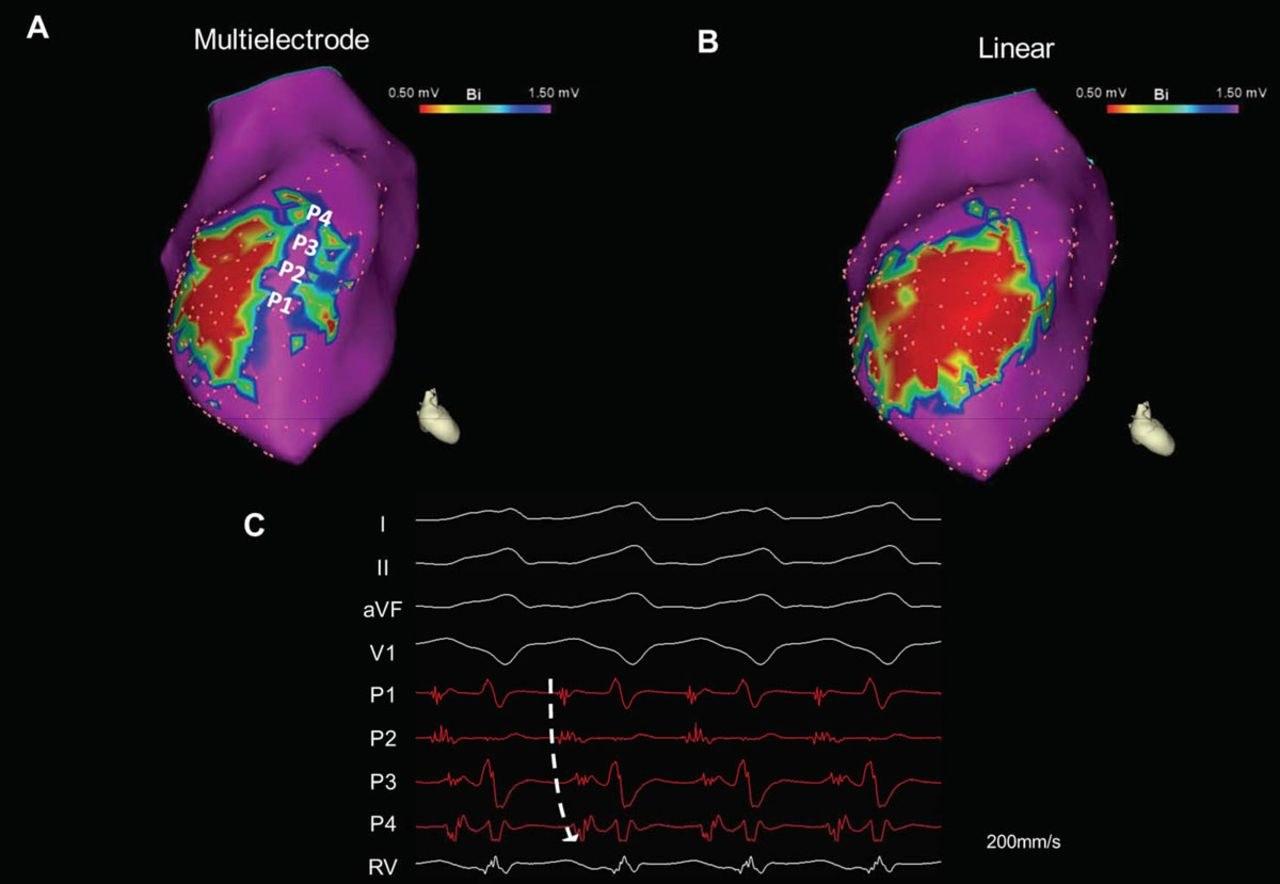
In VT ablation, advanced mapping systems are used to identify the abnormal electrical areas causing the rhythm disorder, which are then treated in a targeted manner.
What Are the Goals of Treatment?
Goals of treatment:
Included
- Reducing recurring VT episodes
- Reducing the number of shocks delivered by the ICD
- Improving quality of life
- Reducing hospital admissions
Not included
- In suitable patients, VT ablation can be planned together with ICD therapy and treatment of the underlying heart condition.
Evaluation and Approach
The following points are given attention during the VT ablation process.
Comprehensive Cardiac Evaluation
The underlying structural heart disease and ventricular function are evaluated in detail using imaging methods.
Advanced Mapping Technology
Abnormal electrical circuits are precisely identified using advanced electroanatomic mapping technology.
Integrated Approach with ICD Therapy
In selected patients, VT ablation is addressed together with ICD therapy and comprehensive management of the underlying heart condition.
Close Follow-Up After the Procedure
After the procedure, the patient is closely monitored, and ICD settings and rhythm status are regularly reviewed.
How Long Does the Procedure Take?
The procedure generally takes 2 hours, and patients are mostly discharged after 2 days.
Clinical Factors Affecting the Evaluation
The scope of VT ablation is based on evaluating the following clinical factors together.
Nature of the Underlying Heart Condition
Underlying conditions such as a prior heart attack, cardiomyopathy, or inherited heart disease directly affect procedure planning.
VT Episode Frequency and ICD Shock History
The frequency of episodes and any history of ICD shocks play an important role in determining the urgency and strategy of ablation.
Ventricular Function
Ventricular function, determined by echocardiography and other imaging methods, affects the risk and planning of the procedure.
Anatomical Location of the Abnormal Circuits
The location within the heart of the electrical circuits causing VT determines the technical difficulty of mapping and ablation.
The information here is for general informational purposes; the diagnosis and treatment plan are determined following an individualized evaluation.
Frequently asked questions about Interventional Electrophysiology
VT ablation is a procedure in which the abnormal electrical circuits causing ventricular tachycardia are identified using advanced mapping technology and treated in a targeted manner with radiofrequency energy.
It may be considered in selected patients who experience recurring VT episodes, receive frequent ICD shocks, or develop VT on the basis of structural heart disease.
No; in selected patients, VT ablation is performed together with ICD therapy and comprehensive management of the underlying heart condition.
Reducing recurring VT episodes, reducing ICD shocks, improving quality of life, and reducing hospital admissions are among the goals of VT ablation.
The procedure generally takes about 2 hours, and patients are discharged after 2 days in selected cases.
There may be a possibility of VT recurrence after ablation; for this reason, regular follow-up and, if necessary, further evaluation are important after the procedure.
Get in touch with us for an evaluation
Send your appointment request; we'll let you know about the evaluation process suited to your complaint and needs.