
What Is Carotid Artery Disease and Carotid Intervention?
Carotid artery disease occurs when the arteries supplying blood to the brain become narrowed, most commonly due to atherosclerosis. Plaque buildup can reduce blood flow or, more importantly, cause a blood clot or plaque fragments to travel to the brain and lead to a stroke or transient ischemic attack (TIA).
- 45-90 Minutes
- Procedure Duration
- Local Anesthesia
- Anesthesia Type
- 1-2 Days
- Hospital Stay
What Are the Symptoms?
Carotid artery disease may cause no symptoms until a TIA or stroke occurs. Possible warning symptoms include:
Sudden weakness or numbness, especially on one side of the body
Sudden difficulty speaking or understanding speech
Sudden loss of vision in one eye
Sudden dizziness or loss of balance
How Is It Diagnosed?
These symptoms require immediate emergency medical assessment. Evaluation may include:
Included
- Carotid Doppler ultrasound
- CT angiography (CTA)
- MR angiography (MRA)
- Cerebral imaging when clinically indicated
Not included
What Is Carotid Intervention?
The degree of narrowing, plaque characteristics, symptoms, and overall stroke risk are considered when deciding on treatment. Carotid intervention is used in selected patients with significant carotid artery narrowing to reduce the risk of future stroke.
Carotid Artery Stenting
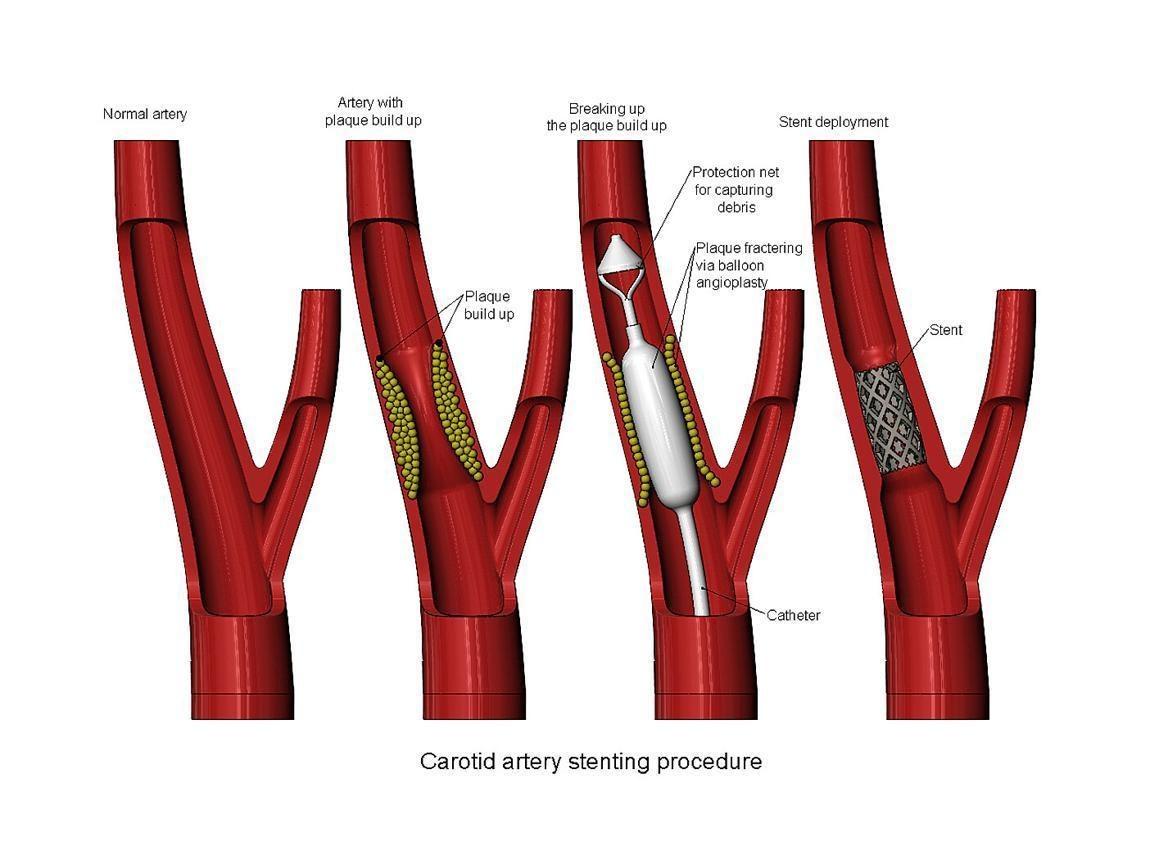
A catheter is introduced through an artery and guided to the carotid artery. A stent is deployed across the narrowed segment to improve blood flow and stabilize the plaque. In selected cases, transcarotid artery revascularization (TCAR) or other specialized techniques may be considered.
Carotid Endarterectomy
In appropriate patients, especially those with significant symptomatic carotid stenosis, carotid endarterectomy may be recommended. This surgical procedure removes the plaque directly from the carotid artery.
Karotis Arter Stentleme İşlem Süreci
Girişim, ön değerlendirmeden takibe kadar belirli aşamalardan oluşur.
- 01
Doppler USG / BTA / MRA
Ön Değerlendirme
Doppler ultrasonografi, BTA veya MRA ile karotis darlığının derecesi ve plak özellikleri belirlenir.
- 02
Planlama
İşlem Öncesi Hazırlık
Erişim yolu ve stent tipi önceden planlanır.
- 03
Lokal Anestezi Altında
Stentin Yerleştirilmesi
Kateterle karotis artere ulaşılır, daralmış segmente stent yerleştirilerek kan akımı iyileştirilir.
- 04
İşlem Sonrası
Gözlem ve Nörolojik Takip
İşlem sonrası hasta nörolojik durum açısından gözlem altında tutulur.
Who May Benefit From Intervention?
Treatment is individualized and depends on:
Severity of carotid stenosis
Whether the patient has had a recent TIA or stroke
Plaque characteristics
Age and overall health
Surgical and procedural risk
Anatomy of the carotid arteries
Carotid artery disease is an important cause of preventable stroke. Early detection and appropriate management of cardiovascular risk factors can reduce stroke risk. In selected patients with significant disease, carotid endarterectomy or carotid stenting can provide effective stroke prevention.
Frequently asked questions about Interventional Cardiology
Karotis arter stentleme, ciddi karotis darlığı bulunan hastalarda inme riskini azaltmak amacıyla, daralmış segmente kateter yoluyla stent yerleştirilmesini içeren minimal invaziv bir girişimdir.
Ciddi karotis darlığı olan, cerrahi endarterektomi açısından yüksek risk taşıyan veya anatomik olarak stentlemeye uygun bulunan seçilmiş hastalarda değerlendirilir.
Stentleme kateter yoluyla uygulanır; endarterektomi ise boyunda açık bir cerrahi kesiyle plağın çıkarılmasını içerir. Tercih, hastanın anatomisi ve risk profiline göre belirlenir.
Karotis Doppler ultrasonografi, BT anjiyografi veya MR anjiyografi ile darlığın derecesi ve plak özellikleri değerlendirilir.
TCAR (transkarotid arter revaskülarizasyonu), seçilmiş vakalarda değerlendirilebilen, özel bir erişim tekniği kullanan alternatif bir karotis revaskülarizasyon yöntemidir.
İşlem sonrasında hasta nörolojik durum açısından yakından izlenir ve düzenli aralıklarla karotis görüntülemesi tekrarlanır.
Get in touch with us for an evaluation
Send your appointment request; we'll let you know about the evaluation process suited to your complaint and needs.