
Left Bundle Branch Area Pacing – What Is LBBAP?
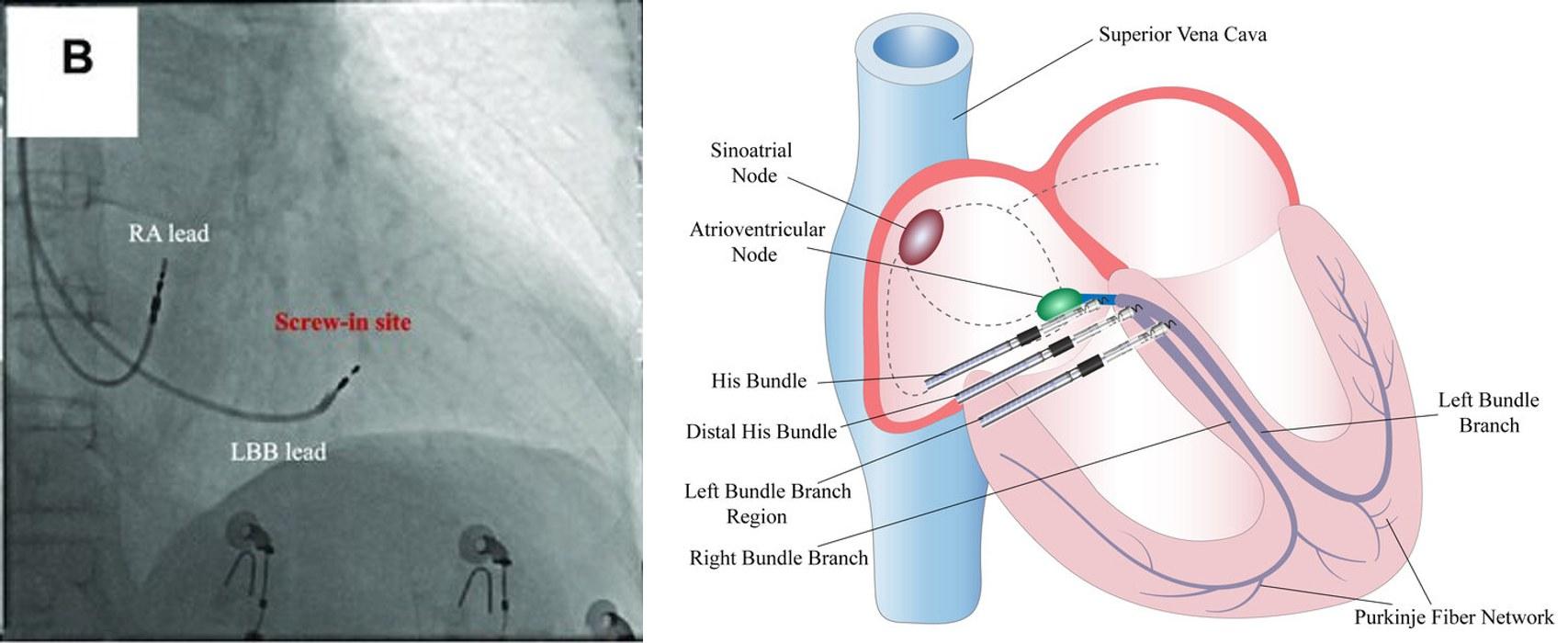
LBBAP (Left Bundle Branch Area Pacing) is a modern pacemaker technique that uses the heart's natural electrical conduction system to help the heart work in a more natural way. While conventional pacing delivers the impulse directly to the right ventricular muscle, in LBBAP a specialized lead is placed in the region of the heart's left bundle branch conduction system.
- 1-2 Hours
- Procedure Duration
- Local Anesthesia
- Anesthesia Type
- Following Day
- Discharge
Who Needs LBBAP, and When?
LBBAP may be considered in selected patients who require long-term pacemaker therapy or cardiac resynchronization therapy and whose conduction system and clinical characteristics are suitable for this approach.
Need for Long-Term Pacing
LBBAP may be considered in patients who need permanent pacemaker therapy and for whom protection from the long-term effects that conventional right ventricular pacing can cause is a goal.
Left Bundle Branch Block and Conduction System Disorders
It may be considered in patients with a disorder of the heart's natural conduction system who could benefit from a more physiological pacing method.
Patients Requiring Cardiac Resynchronization
In selected patients planned for resynchronization therapy, it may be considered as an alternative or complementary approach to a lead placed via the coronary sinus.
Risk of Ventricular Function Loss from Conventional Pacing
It is considered as a more physiological option in patients for whom long-term right ventricular pacing is thought to potentially have an adverse effect on ventricular function.
What Are the Possible Advantages of This Method?
The possible advantages of this method in suitable patients:
Included
- More natural activation of the heart
- Reduction of pacing-induced QRS widening
- Reduction of contraction dyssynchrony between parts of the heart
- Serving as an alternative treatment option in certain patients who need long-term pacing
Not included
Assessment and Approach
Care is taken with the following points during LBBAP assessment and the implantation process.
Assessment of Conduction System Anatomy
Before the procedure, the patient's conduction system anatomy is assessed using ECG findings and imaging methods.
Electrical Measurement Verification During the Procedure
Correct lead placement in the target region is confirmed with electrical measurements taken during the procedure.
Individualized Pacing Strategy
The most suitable pacing method is determined by jointly assessing the patient's conduction system, ventricular function, and clinical condition.
Post-Procedure Follow-up and Optimization
After the device is implanted, programming settings are reviewed at regular check-ups.
The LBBAP Procedure Process
LBBAP implantation consists of specific stages, from initial assessment to post-procedure follow-up.
- 01
Imaging and ECG
Initial Assessment
The patient's conduction system and suitability for LBBAP are assessed using ECG and echocardiography findings.
- 02
Planning
Pre-Procedure Planning
The access site and the lead to be used are planned.
- 03
Under Local Anesthesia
Lead Placement
Under local anesthesia, the lead is advanced through a vein into the right ventricle and directed through the septum to the region of the left bundle branch conduction system.
- 04
After the Procedure
Observation and Programming
After the procedure, the patient is kept under observation and the device settings are programmed.
Factors Affecting the Assessment
Which pacing method is most appropriate is decided by evaluating the patient's heart rhythm, cardiac pumping function, anatomy, and general health.
Heart Rhythm
Cardiac Pumping Function
Anatomical Structure
General Health Status
The procedure generally takes 1–2 hours, and patients are usually discharged the following day.
Frequently asked questions about Interventional Electrophysiology
LBBAP is a pacemaker technique that aims to provide more physiological ventricular pacing by using the heart's natural conduction pathways, achieved by placing the lead in the region of the heart's left bundle branch conduction system.
In conventional pacing, the lead is placed directly in the right ventricular muscle, whereas in LBBAP the lead is directed to the region of the left bundle branch conduction system; this can provide more physiological activation in suitable patients.
It may be considered in selected patients who need long-term pacemaker therapy or cardiac resynchronization therapy and whose conduction system characteristics are suitable for this approach.
The procedure is performed under local anesthesia; the lead is advanced through a vein into the right ventricle and directed through the septum to the region of the left bundle branch conduction system, and its position is confirmed with electrical measurements.
The procedure generally takes 1-2 hours, and patients are usually discharged the following day; regular device checks are performed after discharge.
No; the suitability of LBBAP is assessed on an individual basis according to the patient's conduction system anatomy, ventricular function, and overall clinical condition.
Get in touch with us for an evaluation
Send your appointment request; we'll let you know about the evaluation process suited to your complaint and needs.